

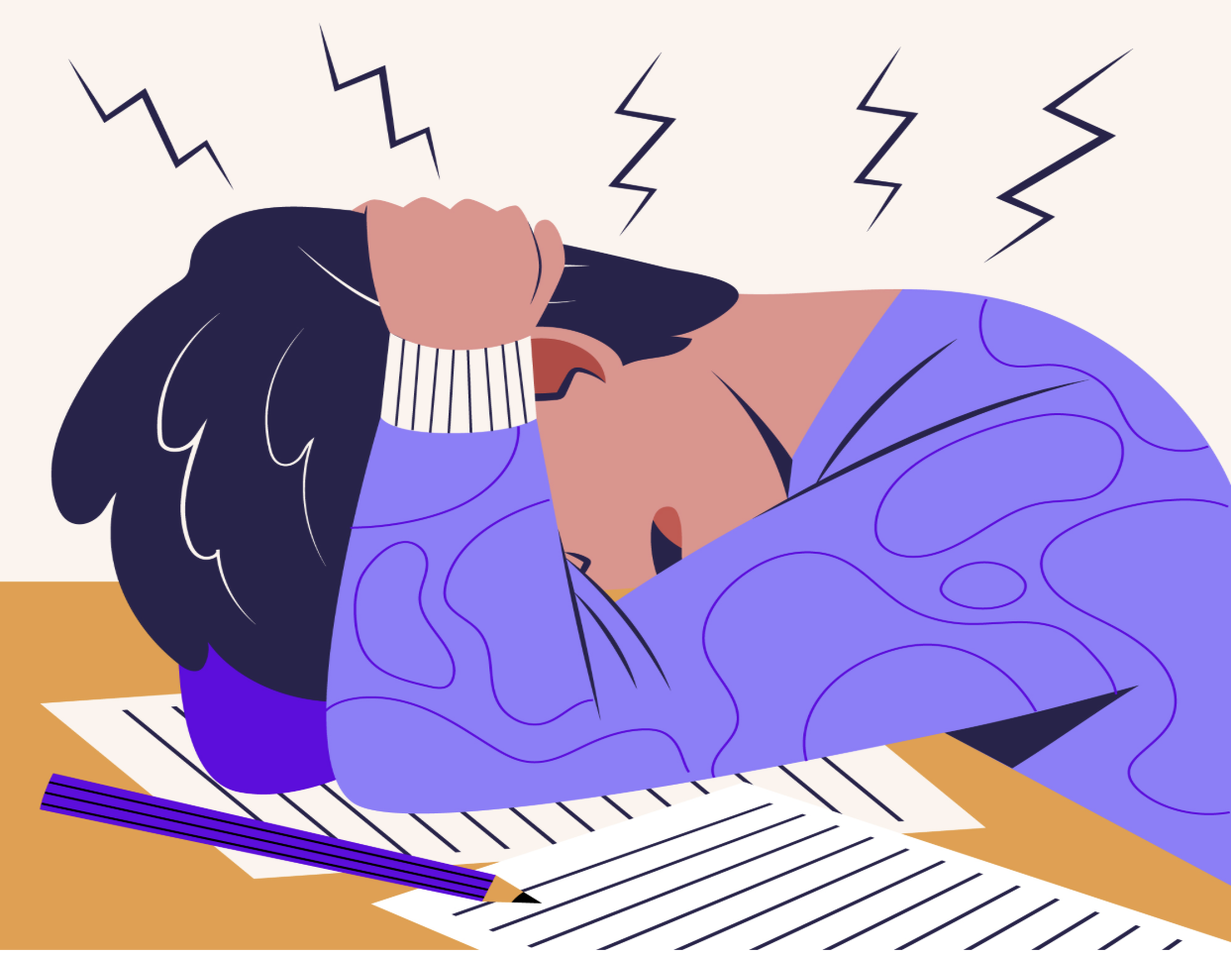
To turn sixteen in most places across the world is something ordinary, something worth celebrating, even. A driver’s license, a first part time job, late night cramming for exams that feel enormous but ultimately aren’t, different extracurriculars done for joy rather than strategy. However, to turn sixteen in India is something else entirely. It is, for hundreds and thousands of teenagers, the moment the clock starts ticking; and it does not stop.
You are offered two pathways. One leads to medical school, which is gated by NEET (The National Eligibility cum Entrance Test). The other leads to engineering, gated by JEE (Joint Entrance Examination) and both of these options demand the same thing: two years of near total devotion beginning at the start of eleventh grade, and ending right after twelfth grade. For some, the preparation begins even earlier; long before a teenager has had the chance to figure out who they are, or what they actually want. Your adolescence is quietly traded in for a desk and a vast syllabus.
Though, it is important to know that not every Indian teenager walks this road. India is a vast country, and its young people are not monolithic. Many go on to pursue arts, commerce, or paths that exist completely outside this system. But for a significant chunk of the country, those whose families dream of a doctor or an engineer at the dinner table, NEET and JEE are not merely exams. They are the entire horizon. And for many of those families, the decision of which pathway to take began at the dinner tables and at family gatherings, in the mouths of relatives who ask a seven year old what they want to be—then spend the next decade quietly correcting the answer.
Some may ask “is it really that bad? Plenty of kids around the world study hard”. But the scale of what India asks of its teenagers is worth thinking about.
“Would you board a plane that has a 98% crash rate?”
That is not a rhetorical flourish. That is the mathematics of this system. Over 2.3 million students registered for NEET in 2024 alone. The number of medicine seats available across India is roughly around 118,000. For JEE, 1.3 million students approximately appear annually. Only 40,000 of them ultimately gain admission into the “prestigious” IITs and comparable institutions. The odds are not slim. They are, for most students, nearly impossible. And yet every year, millions of 16 year olds across India are asked to stake two years of their lives and their sense of self on those odds. Because for a large part of the world they inhabit, this is simply what one does.
I am one of those students. I am still in it. Still inside the machine while writing about it. And I want to tell you what it actually looks like, not in statistics but from my experience.
After five hours of classes, I am told clearly, not as a suggestion, that I need to study five to six more hours on my own. If I do not, I should forget about making it past the competition. A day off for leisure? That concept does not exist in my schedule. On days when there are no classes, I am either sitting through practice tests or reviewing everything taught in the past week. The week does not pause. The syllabus does not rest. And neither, it seems, are we allowed to.
And it is not just me. I have close friends, sixteen, seventeen year olds, who arrive at their classes at 8:30 in the morning and do not leave until 7 in the evening. Ten and a half hours in a classroom, excluding the time spent self studying, every single day, preparing for a single exam. Most working adults in this country do not keep those hours. Most labour laws would not permit it. We ask ourselves… is this a job? Because if it is, no one signed a contract. And if it isn’t, what exactly are we asking of our children?
I once heard a teacher, the infamous kind that NEET and JEE circles seem to produce, tell an entire classroom full of teenagers “Be selfish. Forget your friends. Get the phone numbers of your peers who study well so tomorrow they can give you a job as their assistants.”
We were being taught to hollow out our humanity in exchange for a rank.
The full truth also matters, however. I have also sat in front of teachers who I will carry with me for the rest of my life. Teachers who are remarkable not only in the way they teach, but in who they are as people. Teachers whose warmth and brilliance made me feel, on the hardest days, that learning was still something worth loving. They are not a product of this system. They exist in spite of it. And any honest account of this world has to make room for them. Because they are walking proof that something better is possible.
There is also another dimension of this system that rarely makes it into the headlines. Preparation for these exams is not free. Of course, there are cheaper options, online courses, government initiatives and self study. But the reality for a vast number of families is that quality tutoring costs serious money. Thousands of dollars. A two year preparation can drain a family of several lakh rupees (thousands of dollars) and sometimes more. For many households, this is not a small transaction. It is a significant sacrifice. In some cases, it is everything they have.
All of this does not detail the psychological effects of this system, either.
The sixteen year old sitting with a practice paper in the middle of the night is not just tired. They are aware, acutely and painfully aware of every rupee their parents spent to put them on that chair. From student testimony, this knowledge sets into them like a second exam running parallel to the first. It sits right on top of the academic pressure, on top of the social pressure, and on top of the sheer physical exhaustion of attending classes for hours. It turns what was already a heavy load into something that, for some students, can become unbearable.
According to India’s National Crime Records Bureau, in 2020, one student takes their own life every 40 minutes. An average of 34 student suicides per day. By 2021, approximately 13,089 students had died by suicide. A 4.5% rise from the year before, with hundreds connected directly with exam failure. A peer reviewed study found that among NEET and JEE aspirants specifically, 2023 saw the highest recorded peak. 33 documented deaths in a single year. The majority of those who died were between the ages of fifteen and twenty.
Fifteen. Sixteen. Seventeen. The same ages at which teenagers elsewhere are picking electives and figuring out who they want to be.
A 2023 study in Kota found that over 85% of students spent six to seven hours daily in coaching alone, some even stretching to eight. Students reported loneliness, mood swings, fatigue and depression. More than 80% said that they wanted a day off for leisure. In many circles, even asking for so little can feel like weakness.
The exams themselves were not born from malice. NEET and JEE were built on a reasonable idea. It was built to create a standardized merit based pathway into medicine and engineering in a country of over a billion people where nepotism and institutional favoritism had long decided who deserved to enter. These exams have, and will continue to, turn the lives of people around. They gave students from small towns and modest families a legitimate shot at the most prestigious colleges in the nation, armed with nothing but preparation and merit. That too should not be dismissed.
But a 2024 Ministry of Education Committee reports described India’s current entrance testing model as “elimination-centric”. That phrase lands differently when you have lived it. When you understand the fact that the vast majority of people who sit for these exams are not designed to discover what they know. It is to find a reason to turn them away. We have built an entire culture, an entire economy, of coaching institutes and parental sacrifice in preparing children to be eliminated gracefully.
The problem was never the learning. It was never the ambition, or the dream of becoming a doctor who saves lives, or an engineer who builds something extraordinary. Those are beautiful things to dream of. The issue lies with a system that takes such a beautiful dream, and uses it as a leash. That places ten hours of daily labour on a sixteen year old’s back, tells them to forget their friends, strips their days of any room to simply “be”, and then goes on to show surprise when it is truly difficult.
So here is the real question; not whether these exams should exist, and definitely not whether medicine and engineering are noble pursuits. The real question is this: “At what cost?”
More importantly, “Who decided that this cost was acceptable?”

Leave a Reply